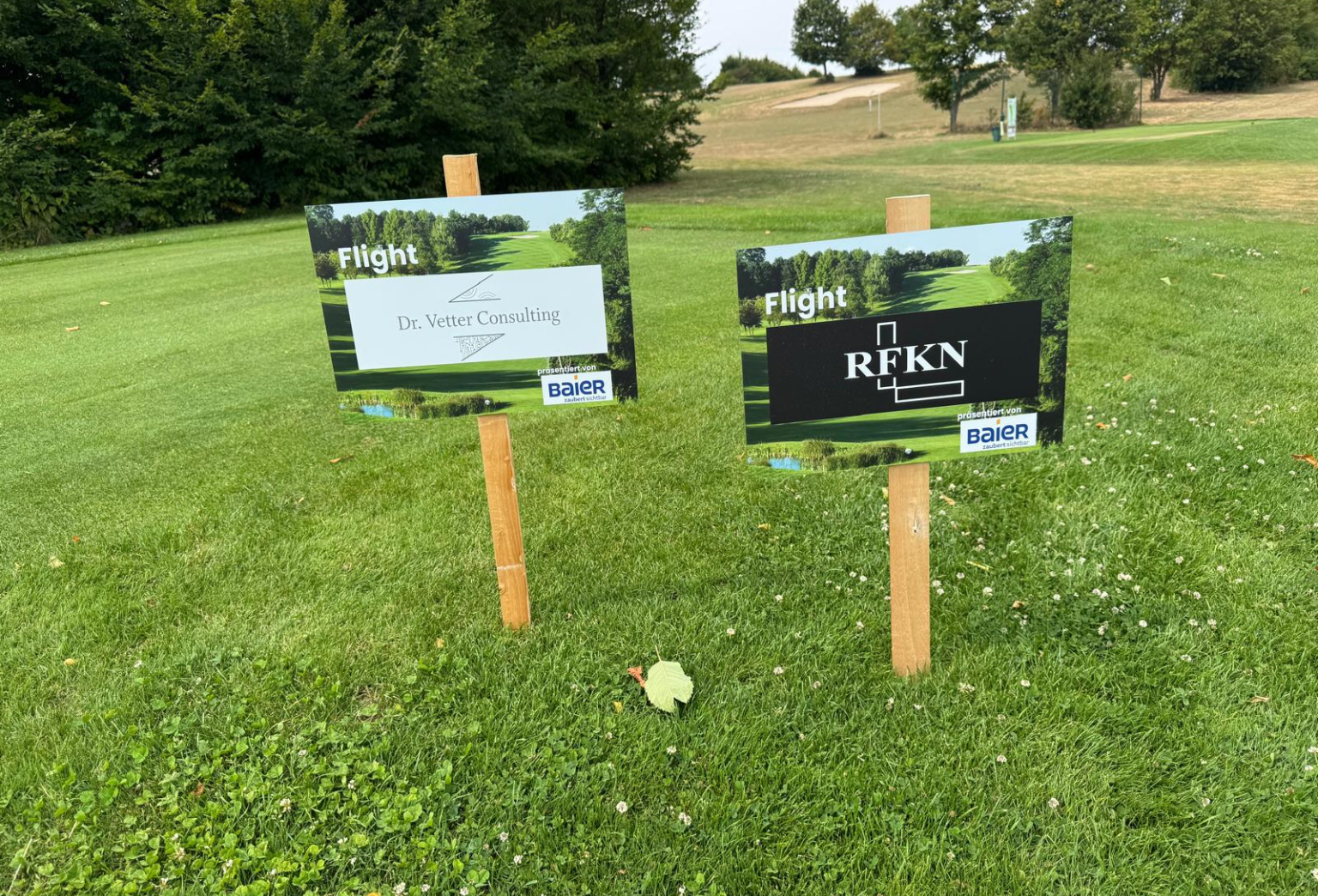
An exciting day of golf brought to mind the challenges on and off the course
The Arbitration Legacy of LIV Golf: How Modern Sports Governance is Reshaping Professional Golf
When Jon Rahm reached an agreement with the DP World Tour in 2026 to resolve the outstanding disciplinary issues connected with his participation in LIV Golf events, much of the public commentary focused upon the sporting consequences of the settlement. Discussion centred upon Ryder Cup eligibility, the continuing relationship between LIV Golf and the established tours, and the commercial implications for professional golf. The settlement, however, also demonstrated the continuing influence of the 2023 Sport Resolutions arbitration, which upheld the legal framework governing the DP World Tour’s treatment of members competing in conflicting LIV events.
In sport, arbitration can serve as more than a private mechanism through which individual contractual disputes are determined. Increasingly, arbitral tribunals are best placed to define the limits of regulatory authority and commercial freedom within transnational sporting systems. Professional golf provides a particularly clear contemporary illustration of this development, where competing commercial leagues and overlapping regulatory bodies have transformed arbitration into an essential mechanism of governance.
The Role of Arbitration in Professional Golf
The structure of professional golf makes arbitration particularly well suited to the resolution of disputes. Unlike sports organised principally through domestic leagues and clubs, professional golf operates through an international network of tours, governing bodies and tournament organisers. Professional golfers compete as individuals rather than as members of teams, clubs or associations that provide an institutional structure through which their professional activities are organised. There is therefore no single regulatory authority governing the relationship between those organisations and the players who compete across them. Instead, much of that authority derives from membership regulations, tournament conditions and other private arrangements which may operate across several jurisdictions.
Arbitration is well adapted to this fragmented institutional structure because it provides a common adjudicative mechanism within a regulatory system that does not correspond neatly with any single national legal order. Disputes concerning membership, eligibility or disciplinary authority can be determined without requiring the parties to pursue parallel or successive proceedings before national courts. Specialist expertise and procedural flexibility reinforce those advantages. Sports arbitrators are familiar with the commercial and regulatory context in which disputes arise, while procedures can be adapted to the timetable of professional competition. This is particularly important in golf, where exclusion from even a small number of tournaments may affect qualification, ranking opportunities and eligibility for later events. Interim measures may preserve a player’s position while the underlying dispute is determined, preventing the passage of the sporting calendar from rendering an eventual decision ineffective. Therefore, arbitration does not replace rules made by tours and governing bodies but provides a transnational adjudicative process through which those rules can be interpreted and applied across an international sporting system built largely upon private regulation.
The 2023 DP World Tour Arbitration
The 2023 arbitration between the DP World Tour (“the Tour”) and a number of its members provides a particularly clear example of arbitration operating within this regulatory structure. In 2022, a number of players competed in LIV events after the Tour refused their requests for releases under its Conflicting Tournament Regulations (CTRs) The Tour imposed fines of £100,000 and suspensions, which were challenged before an Appeal Panel appointed through Sport Resolutions. The players relied principally on restraint of trade, competition law and contractual grounds, requiring the Panel to determine whether the Tour could lawfully restrict where its members competed.
The legal relationship between the players and the Tour is central to this question. Professional golfers are not employees of the tours on which they compete and are not ordinarily required to compete exclusively on one tour. They operate as independent contractors, earning primarily through tournament prize money, sponsorship and endorsements while bearing their own professional expenses. Tours, in turn, compete for the services of leading players on an event-by-event basis. The dispute therefore concerned the extent to which a commercial sporting organisation could restrict the economic freedom of independent professionals who were also its members.
The Tour’s regulatory framework expressly sought to balance those interests. The CTRs recognised members as independent contractors and provided that the Tour would not unreasonably restrain them from competing elsewhere. At the same time, a member wishing to play in a conflicting tournament was required to obtain a release. In determining an application, the Chief Executive was required to act reasonably and balance the interests of the player against those of the Tour and its membership. Participation without the required release could result in a fine, suspension, or expulsion.
The Panel accepted that the CTRs restrained the players’ economic freedom. The issue was whether that restraint protected legitimate interests of the Tour and went no further than reasonably necessary. The Panel held that it did. The Tour depended upon attracting leading players to maintain the quality of its tournaments and meet its commercial commitments and was entitled to protect those interests when members wished instead to compete in rival LIV events. This release system was central to the award as it did not impose an absolute prohibition on competing elsewhere but required competing interests to be considered in the circumstances of each request.
The Panel also rejected the competition law challenge. It distinguished between protecting the DP World Tour’s own tournaments and preventing LIV from competing. The fact that the CTRs could make it more difficult or expensive for LIV to attract DP World Tour members did not make them unlawful. The tours were themselves competing for the services of professional golfers, and the Tour was entitled to take proportionate measures to protect its position in that competition.
The Panel accordingly dismissed the appeals and ordered each appellant to pay the £100,000 fine originally imposed by the tour. Its reasoning did not give the Tour an unrestricted power to control the activities of independent golfers. Rather, it established that, under the regulatory framework considered by the Panel, the Tour could impose reasonable and proportionate conditions on members wishing to compete in conflicting events, while players remained free to pursue those opportunities outside the constraints of membership. The award therefore defined the legal relationship between membership and participation in LIV, a framework that continued to govern later disciplinary disputes as LIV became an established part of professional golf.
Arbitration as Sports Governance
The continuing effect of the 2023 award can be seen in the later dispute involving Jon Rahm. When Rahm joined LIV Golf, he chose to retain his DP World Tour membership and therefore remained subject to the Tour’s CTRs. His subsequent participation in LIV events without releases resulted in fines and suspensions, which he appealed. While his appeal remained pending, Rahm retained his DP World Tour membership and continued to be eligible to compete. That distinction was important because DP World Tour membership formed part of the eligibility requirements for Europe’s Ryder Cup team. Rahm was consequently able to represent Europe at the 2025 Ryder Cup while his disciplinary dispute with the Tour remained unresolved. The 2026 settlement allowed Rahm to compete on both circuits. Rahm withdrew his appeal, agreed to pay the outstanding fines and to play in agreed DP World Tour events. In return, the Tour granted conditional releases permitting him to participate in conflicting LIV events. The agreement also resolved the disciplinary uncertainty surrounding his position for the 2027 Ryder Cup.
The terms of the settlement are important because they address the same tension that lay behind the 2023 arbitration. The Tour had an interest in securing the participation of its members in its own tournaments, while players sought the freedom to compete elsewhere. The settlement accommodated both interests. Rahm could continue to play for LIV without relinquishing his DP World Tour membership, but only on terms that recognised the Tour’s release system and required him to meet financial and playing obligations towards the Tour. The 2023 arbitration had established that the Tour could, in the circumstances considered by the Panel, lawfully regulate those competing interests through its CTR, while the Rahm settlement shows how competing interests could subsequently be accommodated in practice.
The progression from the 2023 award to the 2026 settlement provides an illustration of the wider governance function of sports arbitration. In a sport organised internationally through overlapping private rules, arbitral decisions can do more than dispose of individual disputes. By interpreting those rules within a common specialist forum, they can provide continuity in their subsequent application and clarify a legal framework within which players and governing bodies adjust to changes in the structure of professional golf.
References:
Poulter and others v PGA European Tour (SR/165/2022, Appeal Panel, 3 April 2023) https://www.sportresolutions.com/assets/documents/2023.04.03_-_Players_v_PGAET_-_Decision_%28redacted%29%28reduced%29_.pdf
Lorenzo Casini, ‘The Making of a Lex Sportiva by the Court of Arbitration for Sport’ Beyond Dispute: International Judicial Institutions as Lawmakers (2011) https://www.cambridge.org/core/services/aop-cambridge-core/content/view/2C6CAF230B302980A73466224662685A/S2071832200017326a.pdf/the-making-of-a-lex-sportiva-by-the-court-of-arbitration-for-sport.pdf
Zach Schenfisch, ‘Jon Rahm Settles Dispute With DP World Tour’ (5 May 2026) Forbes https://www.forbes.com/sites/break80/2026/05/05/jon-rahm-settles-dispute-with-dp-world-tour/
Ewan Murray, ‘Jon Rahm free for 2027 Ryder Cup after striking deal with DP World Tour’ (5 May 2026) The Guardian https://www.theguardian.com/sport/2026/may/05/golf-jon-rahm-dp-world-tour-agreement-ryder-cup-liv
Peter Scrivener, ‘DP World our reportedly ‘wins’ arbitration case against LIV players
(4 April 2023) BBC Sport https://www.bbc.com/sport/golf/65171297