Mind the Gap: Pre-contractual negotiations and the limits of arbitral contract interpretation in Transtonnelstroy Afcons JV Chennai Metro Ltd v. Oriental Insurance Co Ltd.
The decisions of the Delhi High court in Transtonnelstroy Afcons JV Chennai Metro Ltd v. Oriental Insurance Co Ltd concerns the extent to which an arbitral tribunal may rely on pre-contractual material when construing an executed insurance policy. The question arose in relation to a ₹1 crore deduction from an insurance claim. The Court held that the negotiation history could not be used to supply a term which was absent from the policy, particularly where the parties had subsequently extended the policy without correcting the alleged omission.
The Dispute
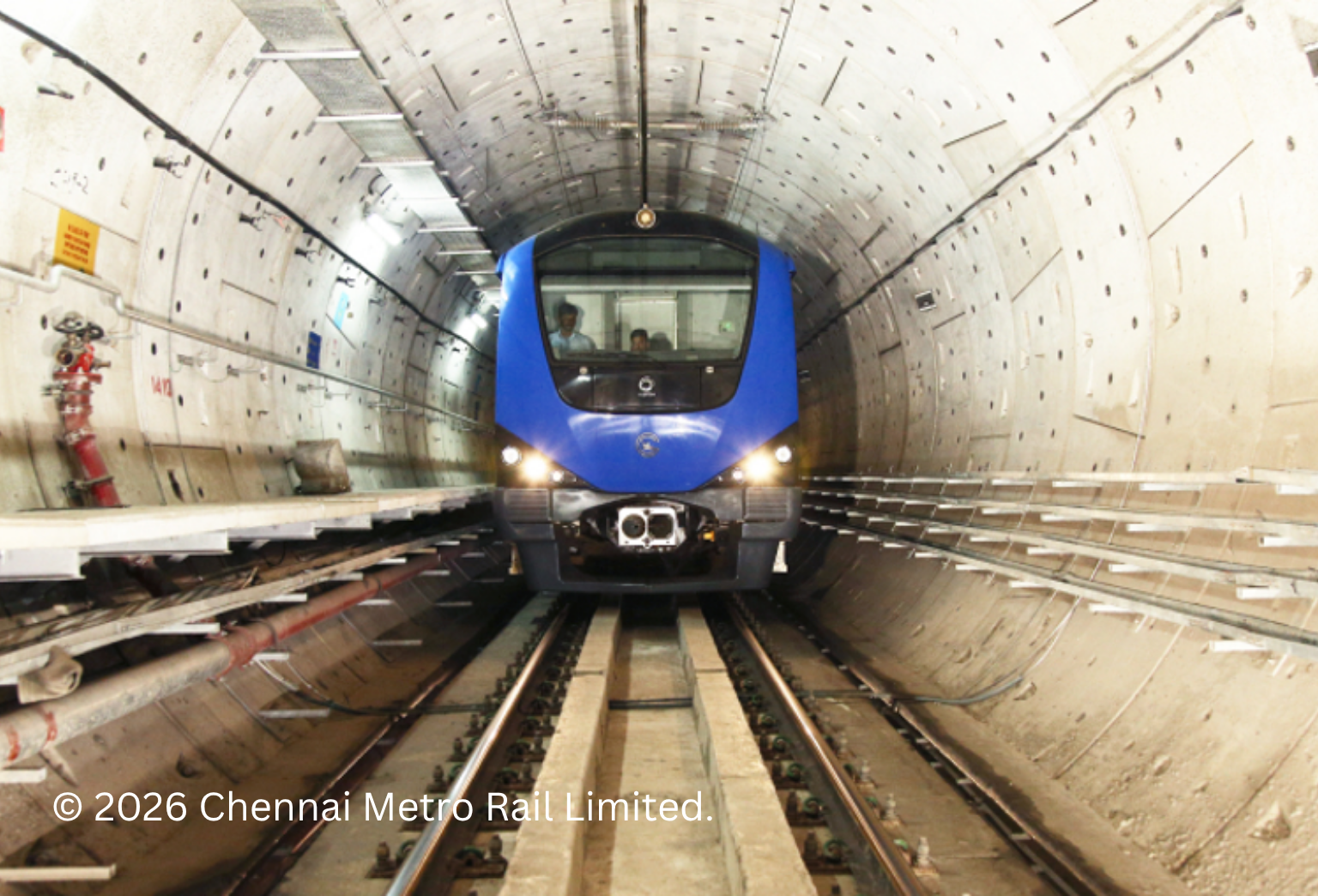
The petitioner had obtained a Contractor All Risk policy from Oriental Insurance in February 2011 in connection with a Chennai Metro project valued at approximately ₹2,597 crore. The policy contained three relevant deductible provisions. Normal claims were subject to a 5% deductible with a minimum of ₹20 lakh; claims arising from Act of God, major perils or maintenance were subject to a minimum of ₹50 lakh; and tunnel collapse (AOG and normal) and design defect were subject to a minimum of ₹1 crore. Following heavy rainfall and flooding in December 2015, the petitioner made claims under the policy. The surveyor assessed the loss and applied the Act of God deductible, with a minimum of ₹50 lakh. When Oriental subsequently settled the claim, however, it deducted a further ₹1 crore by applying the tunnel risk/collapse deductible. The petitioner accepted the balance under protest and commenced arbitration.
One of the issues before the Tribunal was whether Oriental had correctly applied the tunnel risk/collapse excess clause. The Tribunal decided the issue by a 2–1 majority in favour of the insurer. The majority held that the reference to “tunnel risk” had been omitted from the policy by typographical error and relied on the pre-contractual cover note and discussions in construing the deductible schedule.
Before the Delhi High Court
The petitioner challenged the conclusion of the Tribunal under Section 34 1996 Act. Its case was not simply that the Tribunal had preferred the wrong interpretation of the policy. Rather it was that the Tribunal had committed a fundamental jurisdictional error by looking to pre-contract negotiations and held cover notes to alter the plain text of the policy. The petitioner also relied on the fact that the policy had subsequently been extended without correcting the alleged omission.
The Delhi High Court accepted the challenge. Referring to K. Nagendra v. New India Insurance Co Ltd, the court stated that, once a formal insurance policy has been issued, the prior notes, discussions, cover notes and negotiations merge into the final contract. The rights and obligations of insurer and insured are consequently governed by the terms and conditions of the policy. The Court noted that the policy contained the deductible clause concerning tunnel collapse and design defect, but that the insurer subsequently admitted, in a statement of defence filed eight years later, that the omission of “tunnel risk” had been a typographical error. The Court held that the Tribunal had travelled beyond the executed policy by using the pre-contractual material to insert the missing words. An Arbitral Tribunal, it said, is a “creature of the contract and cannot rewrite explicit contractual provisions.” (2026:DHC:6842[25])
The later conduct of the parties was central to the Court’s reasoning. On 29 July 2016, after the policy had been in force for five and a half years, Oriental extended it for a further period in return for an additional premium, while reproducing the same deductible terms. It did not introduce the alleged “tunnel-risk” wording. The majority of the Tribunal had overlooked the extension document, which the Court considered fatal to its conclusion that the omission could simply be treated as an error in the original policy. The Court also attached significance to the absence of any attempt to rectify the instrument. Oriental had neither sought rectification by way of a counterclaim nor issued a policy endorsement correcting the alleged error. The Court referred to Section 26 of the Specific Relief Act 1963 and held that rectification could not be granted unless it was specifically claimed, and that the Tribunal’s unilateral correction of the policy terms was legally unsupportable.
Interpretation or Rectification?
This aspect of the decision is important in distinguishing between construction and rectification. A tribunal may have to determine the meaning of the words the parties have used. It is a different exercise to decide that the parties’ written instrument does not record their agreement and to supply the missing term. The latter question requires the tribunal to determine whether the written instrument accurately records the parties’ agreement and, if not, whether there is a proper legal basis for rectifying it. In Transtonnelstroy, the High Court considered that the majority had crossed that boundary. The decision therefore does not establish that an arbitral tribunal must disregard everything that passed between the parties before signature. The tribunal had used the pre-contractual material to reach a conclusion about what the policy should contain, rather than simply to resolve the meaning of language contained in the policy. That distinction is consistent with the Supreme Court’s approach in Indian Oil Corporation Ltd v. Shree Ganesh Petroleum Rajgurunagar. There, the Court held that an arbitral tribunal is bound by the contract under which it is constituted and that an award may be patently illegal where the tribunal fails to act in accordance with the contract or ignores its specific terms. The Court nevertheless distinguished such cases from an ordinary error in interpreting a contractual provision.
The decision has an obvious implication for the conduct of negotiations. A party cannot assume that every statement made during negotiations will disappear once the contract is signed. However a party should not assume that the negotiation record will preserve a term which the final contract omits. Transtonnelstroy indicates that, where the executed document is inconsistent with the position advanced from the negotiations, the tribunal cannot simply treat the earlier position as part of the contract. The position is stronger where subsequent conduct confirms the terms of the executed document, as the 2016 extension did here.
There is a useful comparison in Devas Employees Mauritius Pvt Ltd v. Antrix Corporation Ltd. There, the Delhi High Court held that an arbitral tribunal had committed patent illegality by excluding evidence relating to pre-contractual negotiations. The two decisions should not be read as establishing opposing rules. Devas shows that pre-contractual material cannot necessarily be treated as irrelevant merely because the contract was subsequently executed. Transtonnelstroy identifies the limit on what that evidence can establish. Its consideration does not entitle the tribunal to treat a term which the parties omitted from the executed contract as though it had been agreed.
For a contracting party, the practical consequence is therefore a matter of drafting rather than evidence. If a point discussed in negotiations is intended to form part of the parties’ obligations, it should appear in the executed contract. If the final instrument does not contain it, the negotiation record may explain how the omission occurred, but it does not necessarily give an arbitral tribunal the power to correct it. In Transtonnelstroy, the court considered that correction to be outside the tribunal’s proper function. The contract which the parties executed remained the starting point, and where the alleged omission required the tribunal to supply rather than interpret contractual language, the limit of the tribunal’s mandate.
References:
Transtonnelstroy Afcons JV Chennai Metro Ltd v Oriental Insurance Co Ltd 2026:DHC:6842
Devas Employees Mauritius Pvt Ltd v. Antrix Corporation Ltd. 2023:DHC:1933DB
Indian Oil Corporation Ltd v. Shree Ganesh Petroleum Rajgurunagar. (2022) 4 SCC 463.
Nagendra v. New India Insurance Co Ltd 2025 INSC 1270.
Shivani PS, ‘Delhi High Court Sets Aside Arbitral Award After Tribunal Relied On Pre-Contract Notes To Alter Contract Terms’ LiveLawBiz (19 Aug 2026).