The Intersection of Prior User Rights, Single-Letter Trade Marks, and Equity: Lessons from New Balance v. Astormueller
In an increasingly globalised marketplace, the territorial enforcement of intellectual property rights frequently emerges as a battleground for international companies. A brand’s visual identity (often refined into a minimalist, single-letter motif) can command vast commercial value while inviting complex legal conflicts. In this case a foreign brand with decades of worldwide prior use encountered a locally registered, deceptively similar mark, bringing up questions of statutory protections and equitable remedies.
The Delhi High Court’s recent decision in New Balance Athletics Inc. v. Astormueller AG & Ors. [2026:DHC:5573] provides an interesting study on how Indian law navigates the tension between dual trade mark registrations, common law passing off, initial interest confusion, and the protection of acquired distinctiveness in single-letter logos.
· Factual Narrative of the Controversy
The dispute arose between New Balance Athletics Inc. (the Plaintiff), a United State based company, and Astormueller AG (Defendant No. 1), a Swiss corporation, alongside its Indian subsidiaries (Defendants No. 2 and 3). The Plaintiff traced its commercial origins back to 1906, establishing international use of its iconic ‘N’ device mark on athletic footwear in the 1970s. Over subsequent decades, the Plaintiff secured statutory trade mark registrations across numerous jurisdictions, including India, where its earliest Class 25 registration for the ‘N’ logo dates back to May 1987, followed by registrations for shaded ‘N’ device marks in 1997 and 2007.
The Plaintiff introduced its products to Indian consumers as early as 1986, consolidating its commercial presence through localized marketing events in 2004–2005, third-party manufacturing arrangements in 2006, flagship retail stores in 2016, and extensive promotional exposure through high-profile sporting events such as the Indian Premier League (IPL). Crucially, the Delhi High Court had previously recognized the Plaintiff’s shaded ‘N’ logo, ‘NEW BALANCE’, and ‘NB’ marks as ‘well-known trade marks’ under Section 2(1)(zg) of the Indian Trade Marks Act, 1999.
Conversely, Astormueller AG, drawing upon a shoemaking heritage dating to 1928 and holding global licences for European brands, established an operational presence in India in 2007. In October 2021, the Defendants conceptualized and adopted the brand name ‘nu:beat’ for a footwear line, deriving ‘nu’ from the Greek symbol for frequency. Between December 2021 and November 2022, Defendant No. 1 obtained Indian trade mark registrations for various stylized marks, including ‘n:’, ‘n: nu:beat’, and ‘nu:beat’ in Classes 18 and 25.
However, commercial sales of footwear bearing these impugned marks in India commenced only in April 2024. In April 2025, upon discovering the Defendants’ listings on e-commerce platforms featuring standalone ‘n:‘ logo marks prominently affixed to the sides of sneakers in a manner virtually identical to the Plaintiff’s placement, the Plaintiff issued a cease-and-desist notice. Upon non-compliance, the Plaintiff initiated a civil suit and an application for ad-interim injunction.
· Submissions and Legal Arguments of the Litigants
The Plaintiff asserted that as the registered proprietor of the ‘N’ device marks in India, it held exclusive rights under Section 28 of the Trade Marks Act, 1999, to utilize the marks and restrain unauthorized third-party use. Counsel for the Plaintiff argued that the Defendants’ ‘n:’ device marks were deceptively, visually, and phonetically similar, utilized on identical goods (footwear) targeting identical trade channels and consumer bases.
This structural overlap created an inevitable likelihood of confusion, exacerbated by the Plaintiff’s extensive historical use of multiple ‘N’ variations and associated brand names (‘NEW BALANCE/NB’ versus ‘NUBEAT/NU B’). Furthermore, the Plaintiff argued that the Defendants’ adoption of the sole letter ‘n’ out of twenty-six letters of the English alphabet constituted a dishonest attempt to ride upon the immense global and domestic goodwill of the Plaintiff. Addressing the statutory bar under Section 28(3) (which precludes infringement actions between two registered proprietors) the Plaintiff maintained that its common law remedy for passing off remained wholly unimpaired, grounded upon its undisputed prior use, established reputation, and the deceptive nature of the Defendants’ adoption.
In opposition, the Defendants contended that no action for trade mark infringement could lie against them by virtue of their valid Indian registrations for the ‘n:’ and ‘nu:beat’ marks under Section 29. On the merits of deceptive similarity, the Defendants submitted that the competing marks possessed distinct visual, typographical, and structural features: the Plaintiff employed an upper-case ‘N’ composed of sharp, rigid zigzag strokes, whereas the Defendants utilized a lower-case ‘n’ featuring a rounded horseshoe arch accompanied by a stylized colon punctuation mark (‘:’). Phonetically, the Defendants argued their mark was pronounced as ‘n-colon’ or ‘nubeat’.
Counsel further submitted that the Plaintiff could not claim a monopoly over an unstylized, single letter of the alphabet. Regarding the passing off claim, the Defendants highlighted their own substantial global reputation, honest adoption tied to the Greek physics symbol ‘nu’, and localized manufacturing since 2007. They submitted that overall product get-up, distinct brand names, and additional elements on shoe tongues and insoles successfully averted any consumer deception.
· Formulated Legal Questions and Subsequent Judicial Answers
- Does the registration of a trade mark in favour of a defendant operate as an absolute bar to an action for passing off instituted by a prior user/registered proprietor?
- Are the Defendants’ impugned standalone ‘n:’ logo marks deceptively similar to the Plaintiff’s registered ‘N’ device marks?
- Does the doctrine of ‘initial interest confusion’ apply to trade mark disputes involving athletic footwear in India?
- Can a proprietor establish secondary meaning and enforceable rights over a single-letter device mark?
- Does the presence of third-party registrations incorporating the letter ‘N’ on the Trade Marks Register satisfy the defense of ‘common to trade’?
· Holding and Judicial Reasoning
Justice Jyoti Singh delivered the judgment of the High Court, granting an ad-interim injunction restraining the Defendants from manufacturing, selling, advertising, or marketing footwear under the impugned standalone logo marks ‘n:’ and related deceptive variants during the pendency of the suit.
The Court’s reasoning rested upon the trinity of passing off: goodwill, misrepresentation, and damage. Firstly, the Court recognized the Plaintiff’s formidable goodwill in India and globally, evidenced by continuous use since the 1970s, significant net revenues, extensive promotional expenditure, celebrity endorsements, and prior judicial declarations designating its shaded ‘N’ logo as a well-known mark. Secondly, on the element of misrepresentation, the Court held that while composite marks such as ‘n: nu:beat’ contained sufficient distinguishing material, the standalone ‘n:’ device marks were deceptively similar to the Plaintiff’s ‘N’ logos.
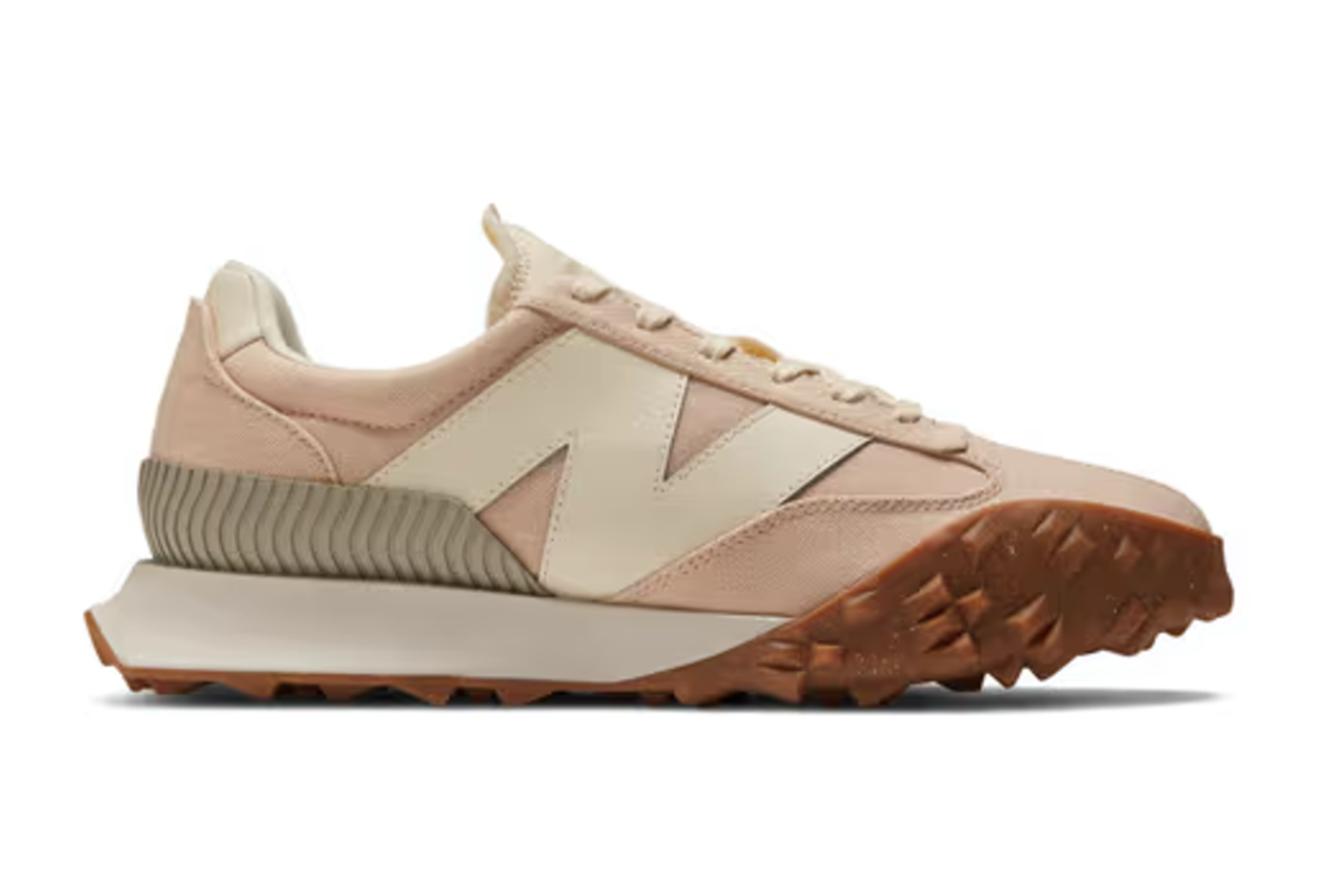
The Court observed that in the retail marketplace, purchasing decisions for footwear are driven by fleeting visual impressions of prominent branding affixed to the exterior of the shoe. The placement of the lower-case ‘n:’ on the side profile of the footwear mirrored the exact commercial positioning of the Plaintiff’s ‘N’ mark, creating a powerful initial interest confusion.
Thirdly, the Court highlighted the primacy of the ‘first in the market’ test. Relying on Neon Laboratories v. Medical Technologies and Pernod Ricard v. Karanveer Singh Chhabra, the Court emphasized that prior continuous user rights under common law hold superior equitable weight over subsequent statutory registrations.
As the Plaintiff established domestic adoption and commercial exposure dating back decades prior to the Defendants’ actual commercial launch in April 2024, the balance of convenience leaned decisively in favour of the Plaintiff. The Court concluded that permitting the Defendants to continue using the deceptively similar ‘n:’ logos would inevitably dilute the distinctiveness of the Plaintiff’s well-known marks and cause irreparable commercial injury.
· Noteworthy Takeaways
The ruling in New Balance Athletics Inc. v. Astormueller AG offers vital guidance for international corporations managing intellectual property portfolios within the Indian.
Firstly, foreign corporations must recognize that in India, statutory trade mark registration does not grant an absolute shield against claims of passing off. Even if an entity successfully obtains a registration from the Trade Marks Registry, a prior user of an identical or deceptively similar mark can invoke common law remedies to restrain commercial operations.
Multinational businesses planning market entry into India should conduct comprehensive prior-use clearance searches—evaluating actual market presence alongside registry databases—to mitigate the risk of injunctions premised on senior common law rights.
Secondly, while single letters of the alphabet are generally considered non-distinctive at the point of adoption, long-term, continuous commercial utilization coupled with strategic enforcement can cultivate robust secondary meaning.
The judgment confirms that Indian courts will protect single-letter device marks against subtle typographical modifications (such as altering letter case or adding minor punctuation like colons) where the overall visual impression causes consumer confusion. Corporations seeking to enforce single-letter logos should systematically compile evidence of global and domestic commercial presence, advertisement spend, and judicial declarations of well-known status.
Lastly, commercial entities defending against intellectual property enforcement frequently attempt to rely on third-party registry search reports to argue that a logo element is publici juris. This judgment re-affirms that Indian courts strictly distinguish between marks ‘common to register’ and those ‘common to trade’.
To successfully establish that a mark or single-letter motif has lost distinctiveness due to third-party prevalence, a litigant must provide concrete empirical evidence proving substantial commercial turnover and active market presence by those third parties. Mere passive registrations will not divest a senior user’s mark of its enforceable distinctiveness.
References:
Trademark Act, 1999, Section 28
New Balance Athletics Inc. v. Astormueller AG & Ors. [2026:DHC:5573]
New Balance Athletics Inc. v. New Balance Immigration (P) Ltd., 2023 SCC OnLine Del 7009.
Neon Laboratories v. Medical Technologies and Pernod Ricard v. Karanveer Singh Chhabra 2016 (2) SCC 67.
Pernod Ricard India Private Limited v. Karanveer Singh Chhabra 2025 INSC 981.
Bhardwaj, Tushar. “The Evolution of Trademark Laws in India: An Analysis.” J. Pat. & Trademark Off. Soc’y 103 (2023): 227.