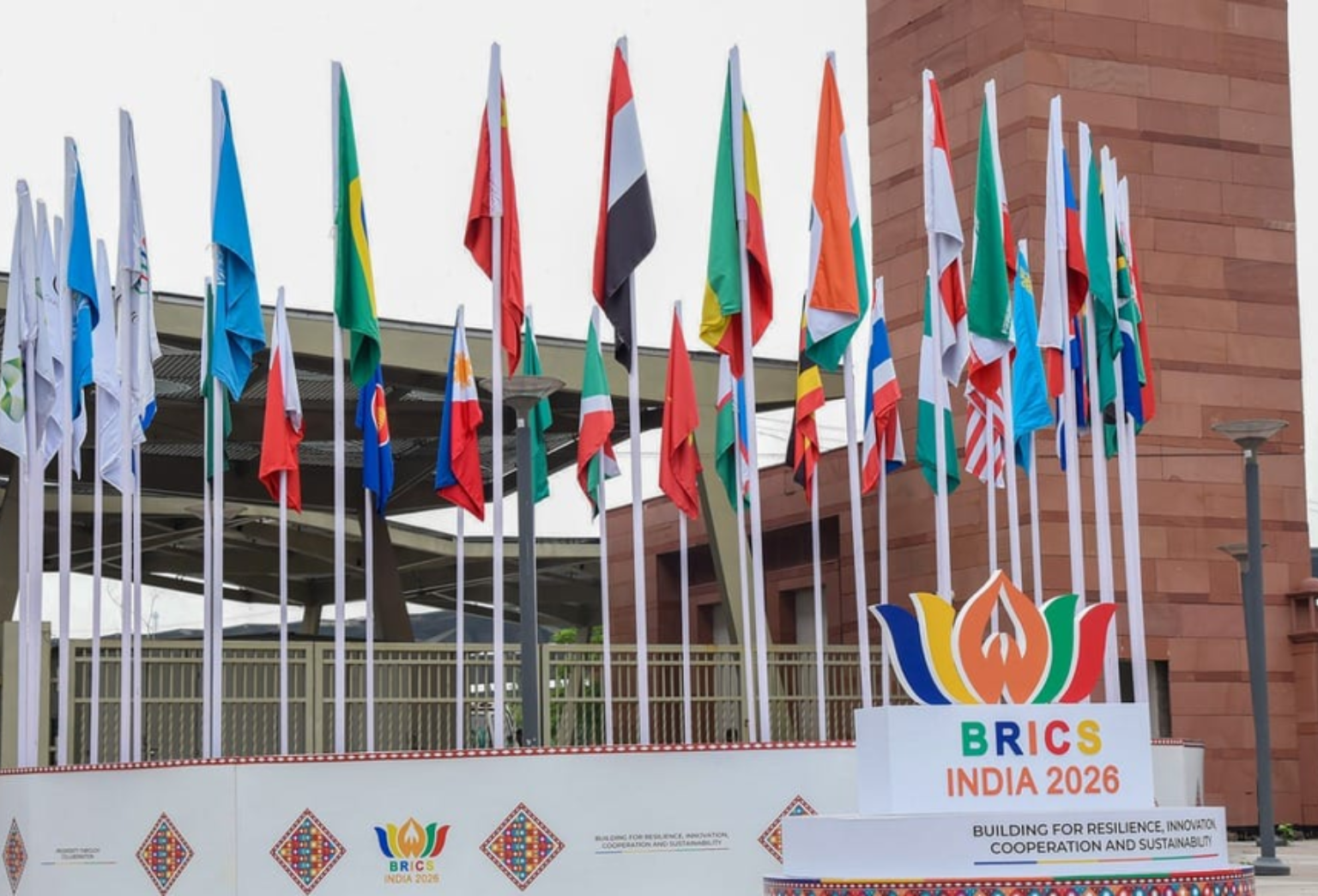
The 18th BRICS Summit met in New Delhi on September 12 and 13, closing out India’s fourth chairmanship of the bloc. Close to 350 meetings across 30 Indian cities preceded it. The New Delhi Declaration that emerged from the Summit included a New Investment Platform, a BRICS Risk Lab at GIFT City, credit-assessment frameworks for exporting MSMEs, an invoice-discounting mechanism, joint customs enforcement, and a submarine cable network linking member economies.
Even though a declaration of this kind does not automatically translate into binding law, it is important to understand that the legal framework for most of these measures that would facilitate international trade in India, already exist. A foreign investor weighing India does not need any of these initiatives to mature before the legal case for coming here is sound.
The infrastructure that actually matters, treaty-based, tested, and already carrying real money and real disputes, was built years ago and has only grown more solid since.
Indian Commercial Law Closely Follows Global Best Practices
The Agreement on the New Development Bank, signed at Fortaleza in 2014 and in force within a year, created a treaty-based institution with legal personality, headquartered in Shanghai, empowered to lend and to be sued like any other bank. It has spent a decade doing that, and its membership keeps widening: Bangladesh, the UAE, Uruguay and Egypt joined by 2021, Algeria joined in 2024, Colombia, Ethiopia and Uzbekistan in 2025, and Angola, the newest entrant joined this year. The Treaty for the Establishment of a BRICS Contingent Reserve Arrangement, signed the same day in Fortaleza, backs member economies with a $100 billion currency-swap facility, a binding financial safety net. Both are treaties, ratified and functioning.
The same pattern holds domestically. Section 151B of the Customs Act, 1962, already empowers India to enter binding reciprocal arrangements with foreign customs authorities “for the exchange of information which will facilitate trade and assist in the prevention of smuggling,” and India has used it for years to conclude working mutual-assistance agreements country by country. The International Financial Services Centres Authority, created by statute in 2019, has binding rule-making power over GIFT City. The results are already measurable: GIFT City had crossed 1,000 registered entities and $100 billion in consolidated banking assets by December 2025, with more than 310 Alternative Investment Funds holding upward of $26 billion in commitments and monthly capital-markets turnover averaging around $90 billion.
An investor entering India now inherits a regulator and an ecosystem that are already running at that scale.
Why the Declaration’s Caution Is a Feature, Not a Gap
It is worth noting that the New Development Bank did not arrive out of nowhere. The idea was floated in earlier BRICS declarations years before Fortaleza, and it took another year after that before the bank actually opened its doors. This to show that the “study group,” “phased, consensus-based approach” and “welcomed progress toward an agreement” language scattered through this year’s New Delhi Declaration is not evasive drafting. It is the same disciplined sequencing that built the NDB into a trusted institution. BRICS member states, and India in particular, do not rush unfinished commitments into binding form and then struggle to deliver on them. Instead they test an idea in successive declarations, build the administrative machinery quietly in the background, and sign the treaty once it can actually hold weight.
That is a track record an investor, especially those coming from outside of India should read as reassurance, not as an absence of progress.
What an Investor Gets Today, and What Is Coming Next
For a business deciding whether to set up in India, the practical picture is layered. The foundation is already binding: GIFT City operates under a live statutory regulator with rule-making teeth, customs cooperation already functions bilaterally under decades-old statutory authority, and India’s dispute-tested trade architecture includes fully binding agreements like the India-UAE Comprehensive Economic Partnership Agreement and the India-Australia Economic Cooperation and Trade Agreement, both enforceable, both operational. Layered on top of that foundation sits a pipeline of further cooperation, MSME trade finance, an expanded reinsurance market at GIFT City, joint customs enforcement, better-integrated digital infrastructure, that BRICS members have now formally agreed to build toward.
The Case for Coming Now
An investor who waits for the New Investment Platform to be signed before entering India will have waited for something that was never the entry condition in the first place.
India’s patent, trademark and copyright regime has been TRIPS-compliant since its 2005 shift to product patents, and Delhi High Court’s dedicated Intellectual Property Division, established in 2021 to absorb the abolished Intellectual Property Appellate Board’s docket, now gives IP disputes specialised adjudication. The new data protection Act and Rules, notified after a public consultation that drew nearly 7,000 stakeholder submissions, provides for a consent-based framework, breach-notification duties, and a Data Protection Board built on the same core principles as the GDPR.
On tax, India now runs faceless assessment to limit discretionary contact between officers and taxpayers, backed by a treaty network of 94 comprehensive and 8 limited double-taxation avoidance agreements. Company law has also been moving in the same direction: amendments since 2020 have decriminalised dozens of procedural defaults under the Companies Act, 2013, routing them to civil penalties instead of prosecution, while the National Company Law Tribunal and Appellate Tribunal give corporate and insolvency disputes a specialised bench. That insolvency regime itself was rewritten again this year: the Insolvency and Bankruptcy Code (Amendment) Act, 2026 introduced a creditor-initiated resolution process with debtor-in-possession features drawn from the American Chapter 11 model, tightened liquidation to a 180-day clock, and formally recognised UNCITRAL’s Model Law framework for cross-border and group insolvencies.
The strongest evidence for confidence in India’s legal architecture is not the New Delhi Declaration. It is everything BRICS and India built before anyone thought to write this declaration, and it was already enough.